
英文 English
Discover how we build confident and effective communicator through our English Language curriculum, authentic learning experiences and reading culture. Journey with us as we empower our student to connect, create and contribute.
Our Objectives
At RSS, we seek to nurture every student to be a confident and effective communicator and a critical thinker, endowed with 21st Century Competencies (21CC) and the ability to leverage technology for learning. He/she has a deep love for the English Language and uses it skillfully to learn, collaborate and contribute to the community.
> MOE Programmes
STELLAR Programme
The STELLAR (Strategies for English Language Learning and Reading) Programme aims to foster a love for reading and a strong foundation in the receptive and productive skills. The STELLAR programme is built on the belief that enjoyment is a fundamental aspect of all positive reading and writing experiences.
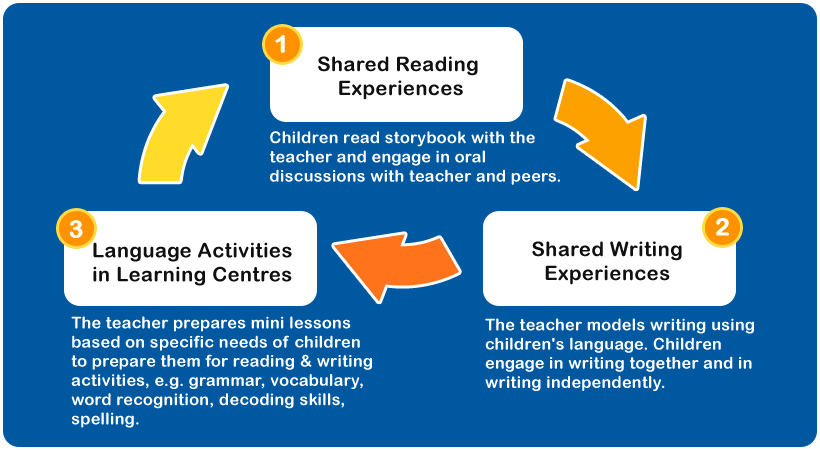
The Lower Primary STELLAR comprises of the following strategies:
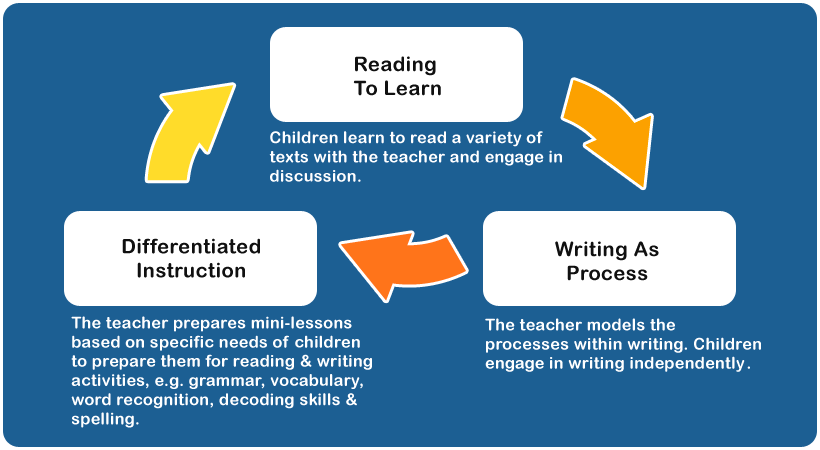
The Upper Primary STELLAR comprises of the following strategies:
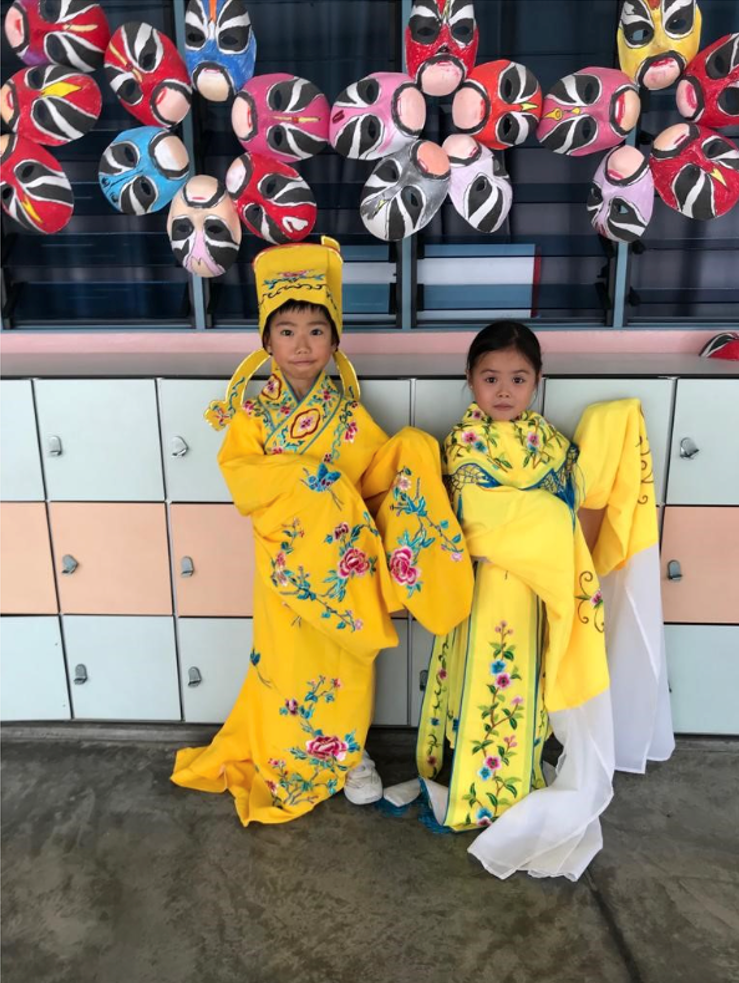
Students role-playing while reading the STELLAR story, 'Chinese Opera'.

Students acting out the STELLAR story, "Mrs Wishy Washy", using character cut-outs.
Learning Support Programme (LSP), Reading Remediation Programme (RRP) and School-based Dyslexia Remediation (SDR)
The LSP (Primary 1 & Primary 2), RRP (Primary 3, Primary 4 & Primary 5) and SDR (Primary 3 & Primary 4) are literacy support programmes that cater to the needs of struggling readers. The lessons are conducted by trained Learning Support Coordinators (LSC), RRP and SDR teacher-instructors who provide remediation in reading, using comprehensive teaching packages developed by the Reading Unit of EL Curriculum Planning and Development Division.
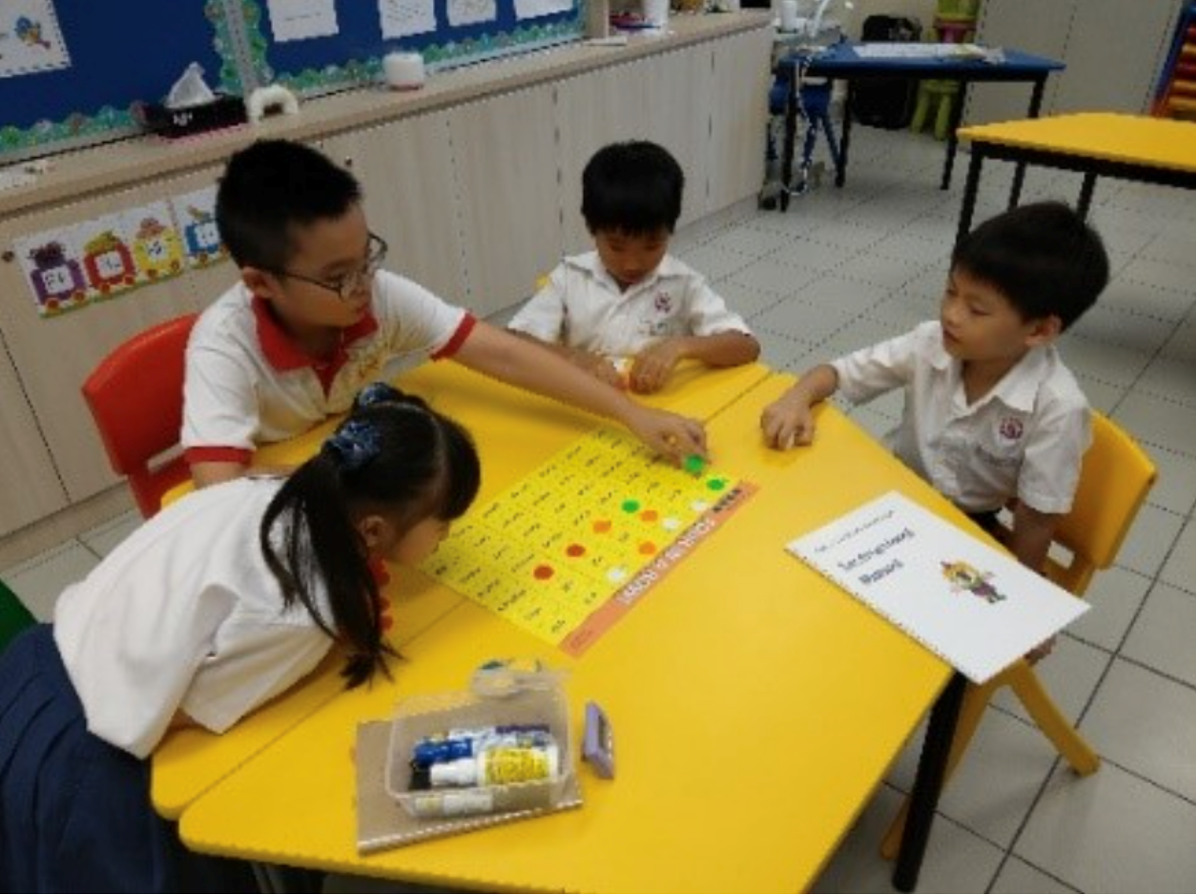
Students enjoying word games after reading a story.
RSS Key Programmes / Activities
Oracy Programmes
Effective Communication Programme (ECP)
Our students hone their communication skills on a variety of platforms. Through the different level activities, they learn to communicate confidently and effectively with a range of audience. They also learn to work collaboratively with their peers and use feedback provided by their teachers and peers to improve on their presentation.
Primary 1: Show and Tell
The P1 students are guided to prepare a speech on a given topic within their knowledge and experiences and present it to their teachers and classmates. This activity not only enables students to hone their public speaking and basic writing skills, but it also provides a meaningful platform for teachers and students to bond as they get to know one another better.
Primary 2: Pick and Tell
This activity extends the learning gleaned by the students when they were in P1. The P2 students pick an item from a collection before they are guided to prepare and present a speech in relation to the chosen item. Through this activity, the students learn to generate ideas creatively and they continue to hone their public speaking and writing skills.
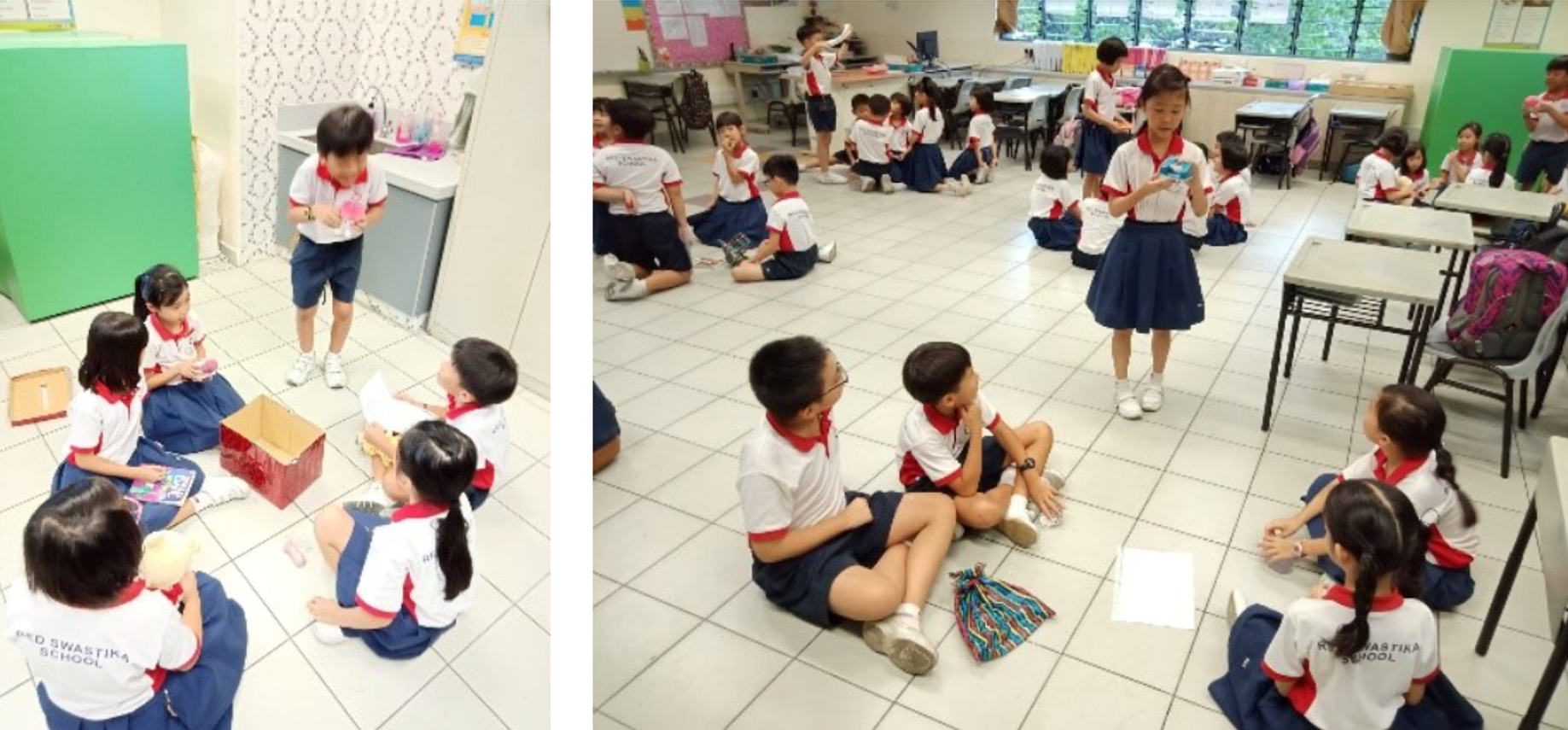
Children enjoying themselves during Pick and Tell.
Primary 3: Readers’ Theatre
The P3 students perform a Readers’ Theatre for their teachers and classmates based on a script of their choice. They work collaboratively as a team to “act out” the different roles in a story by reading in an expressive manner, using effective vocal cues. Through this activity, the students learn effective dramatization skills and continue to build their confidence in engaging an audience.
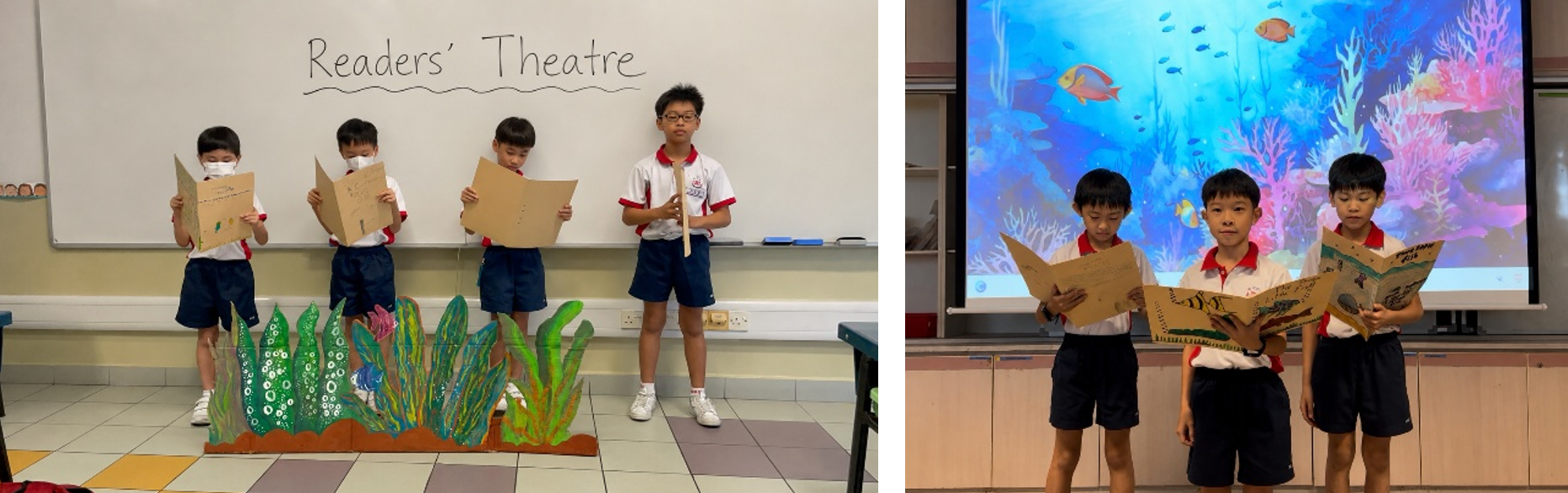
Characters in Action
Primary 4: Persuasive Presentation
To fuel their critical thinking and persuasive communication, P4 students are engaged in the reading and discussion of current affairs in news articles. They are empowered to choose articles that have impacted them, analyze opposing viewpoints and craft compelling presentations, advocating their chosen stance. This dynamic process strengthens critical thinking, hones language skills and builds confidence in public speaking.

Building Perspectives
Primary 5: Debate
Debate activities in the classroom provide students with the opportunity to work in a collaborative and cooperative group setting. Students discuss and organize their points of view for one side of an argument as they discover new information and put knowledge into action. Classroom debates also help students learn through friendly competition, examine controversial topics as well as strengthen their skills in the areas of leadership, communication, problem solving and presentation.
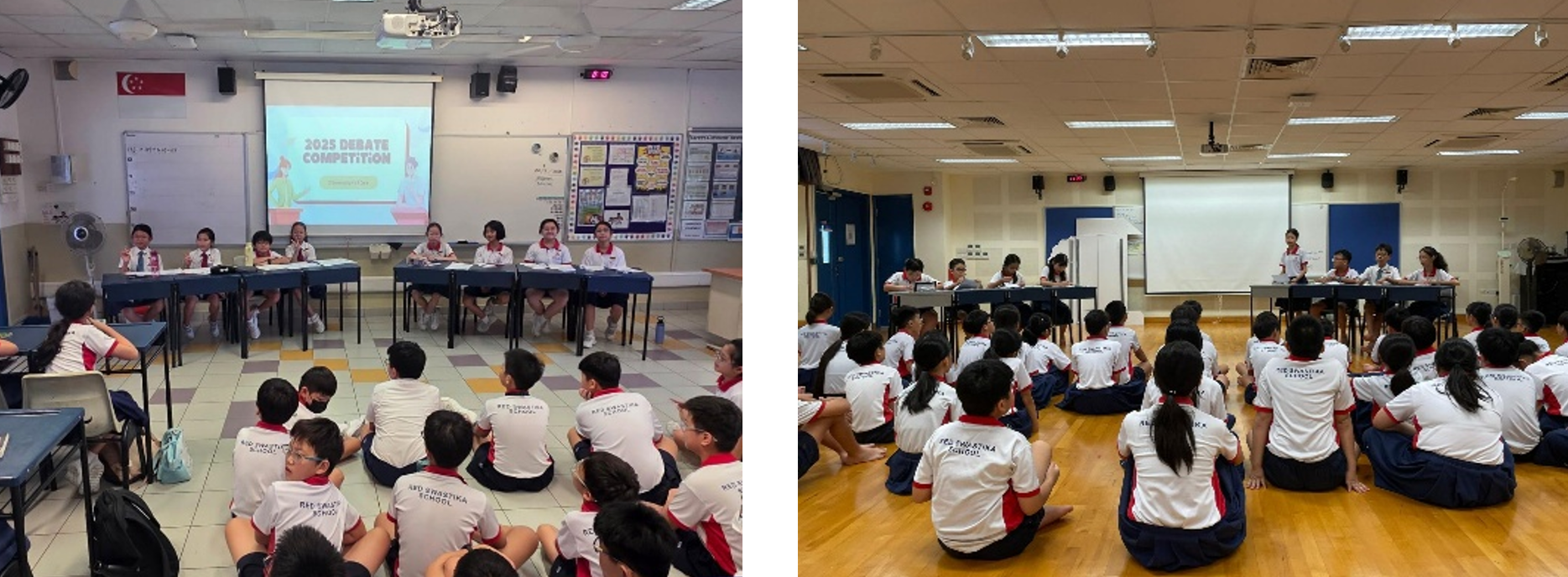
Speaking with purpose
Primary 6: Podcast
Our P6 students will find that producing a podcast is a great way for them to develop their oral and creative writing skills. As they plan and structure their podcast, write and edit their scripts as well as record and edit their audio, the students will be able to express their ideas in a unique and creative way, which is also a beneficial and exciting way to learn in current times.
Writing Programmes
Use of Mentor Texts
We adopt the ‘I Do-We Do-You Do’ model in teaching English. Specifically for writing, Primary 3 and 4 students are guided to read and emulate mentor texts that serve as models of good writing.
I Do:
Based on the focus of a lesson, the teacher introduces a mentor text to teach ideas, structures and/or specific writing skills.
We Do:
Guided practices are designed for students to test drive and apply what they have learnt from a mentor text. The activities are conducted in pairs or in a group to encourage collaborative learning.
You Do:
Students are engaged in independent writing where they apply what they have learnt to their own writing.
Process Writing
From Primary 3 to Primary 6, the students are engaged in process writing where each writing task is broken down into its smaller components. The students are guided to complete each component sequentially, and this helps make writing a more enjoyable task for many students. Besides learning to plan writing, students also learn to appreciate its evolving nature. Process Writing consists of two major and interdependent phases: the prewriting phase and the writing phase. Prewriting helps writers to organize, sequence, and elaborate on their ideas prior to writing. The writing phase turns this organisation of ideas into a composition.
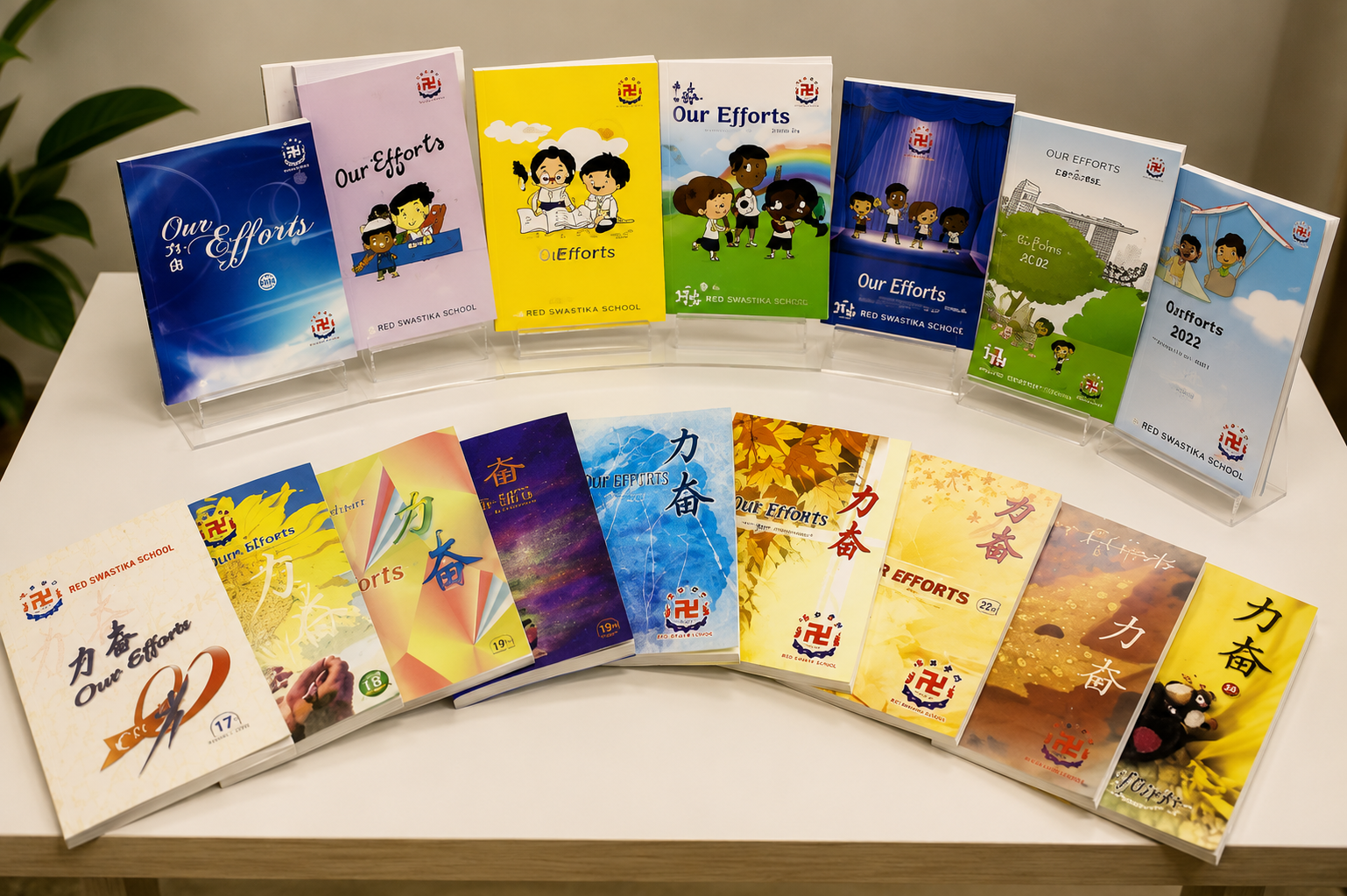
Our Yearly Publication - Our Efforts
Reading Programmes
At RSS, we believe that reading opens doors to imagination, knowledge and lifelong learning. Through in-curriculum reading experiences, library programmes and school-wide reading initiatives, we aim to nurture confident readers and cultivate the joy of reading in every child.
Visits to RSS Library
Students are taken to the school library regularly where they are introduced to the different genres available. Through various library programmes, in-house or in collaboration with the National Library Board, the students are engaged in different activities that deepen their reading interest. Thematic book displays are also put up regularly to introduce students to the wide variety of good books in the library.
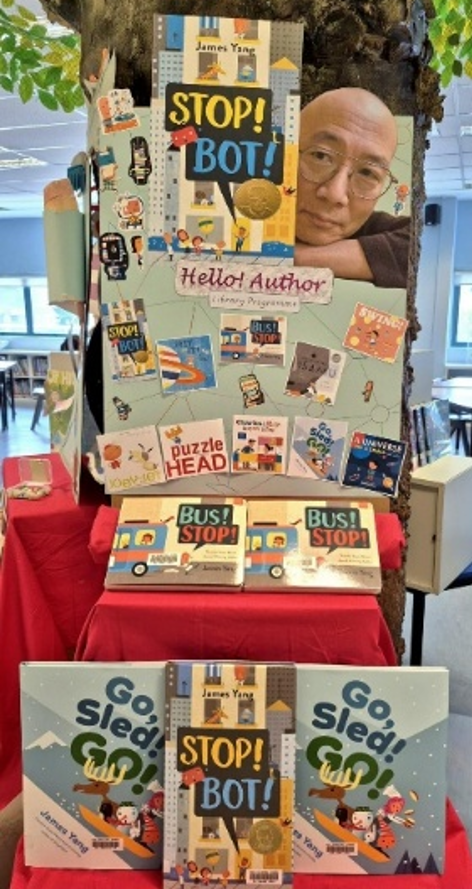
Hello Author! - Monthly Library Programme
In-curriculum Reading Programme
This programme, as part of the STELLAR Programme, aims to inculcate the love for reading in students. Comprising the Shared Book Approach in Primary 1 and Primary 2 and Supported Reading in Primary 3 to Primary 6, the programme is carried out regularly in class. In addition, there is also the Extensive Reading Programme where ‘book floods’ are made available in all EL classrooms – students borrow books from a flood (a huge supply) of books and get to read new books when their classes’ books are exchanged with others’. Through these activities, RSS students discover the joy of reading and open themselves up to a world beyond their imagination.
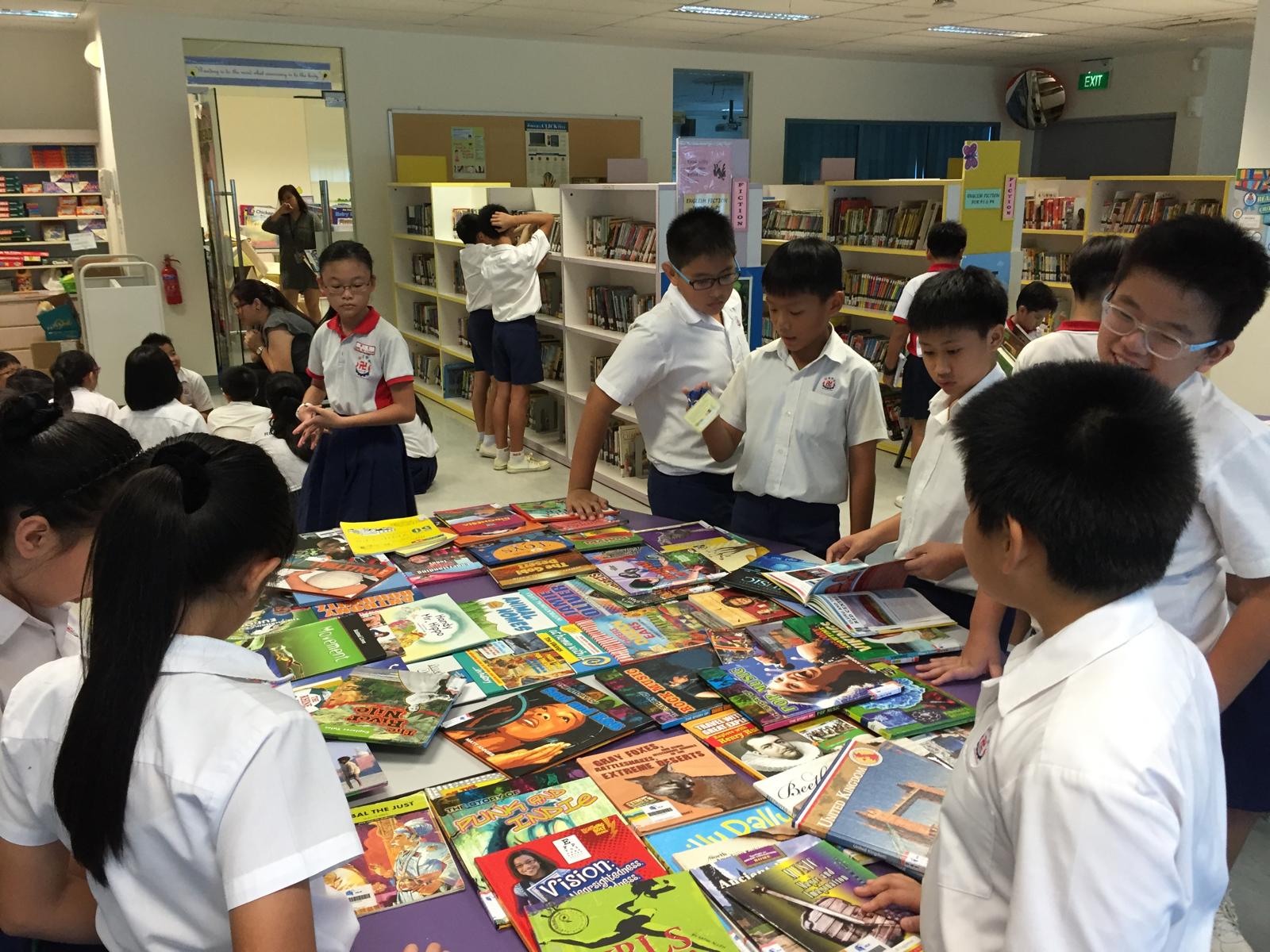
Book Flood @ RSS Library
RSS Reads!
RSS Reads! is a termly event organized by both the English and Chinese Language departments. Every term, students are presented with a different theme, on which reading activities are based. Examples of activities include the following:
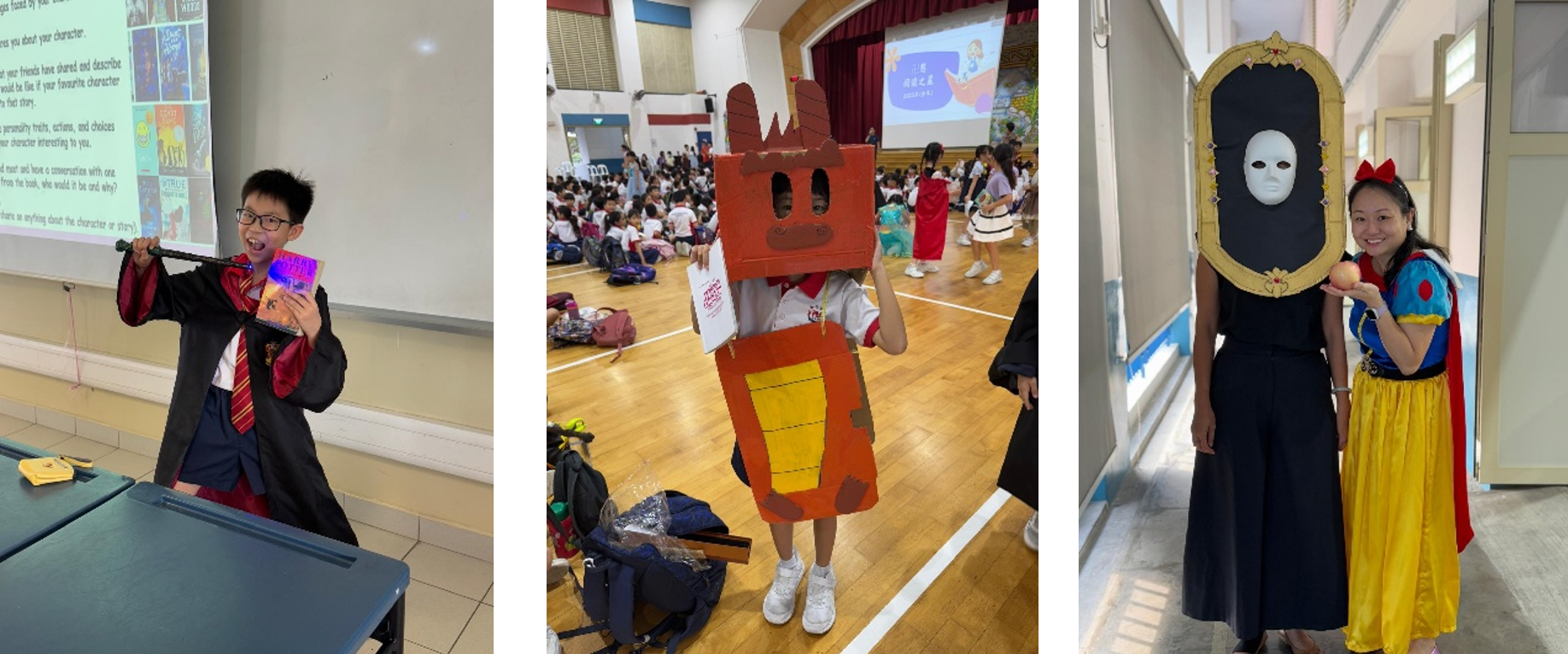
Book Character sharing and Book Character Dress Up
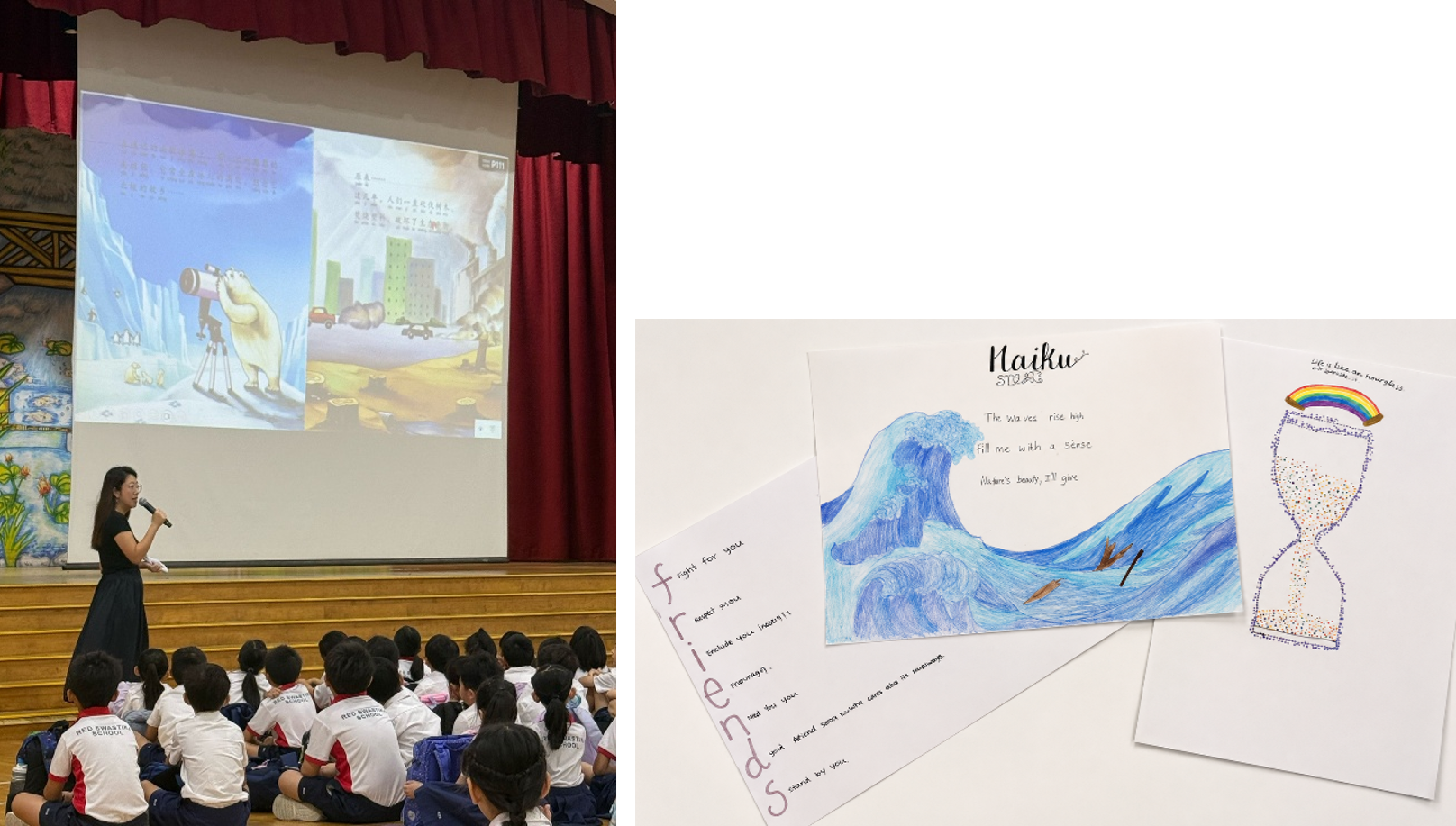
Teachers sharing their favourite reads and Shape poems
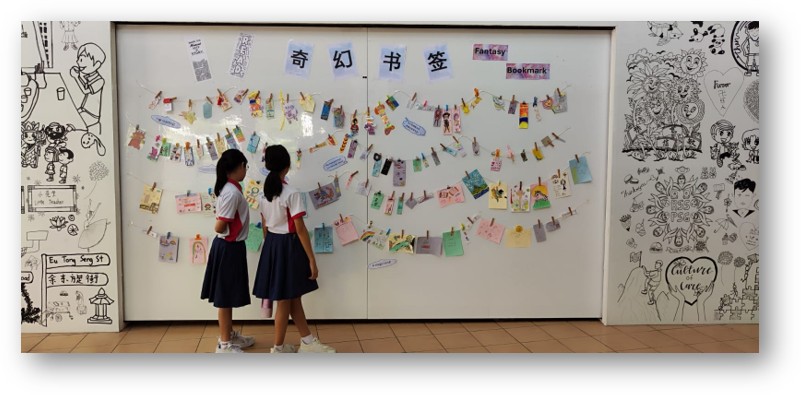
Fantasy Bookmark Showcase
Parent Support Group collaboration
Our Parent Support Group (PSG) partners both the English and Chinese Language departments in supporting the school’s reading programmes. Through storytelling, book sharing and reading engagement activities conducted during recess, parent volunteers support EL teachers’ effort in building a good foundation for the languages and nurturing a lifelong love for reading in students.
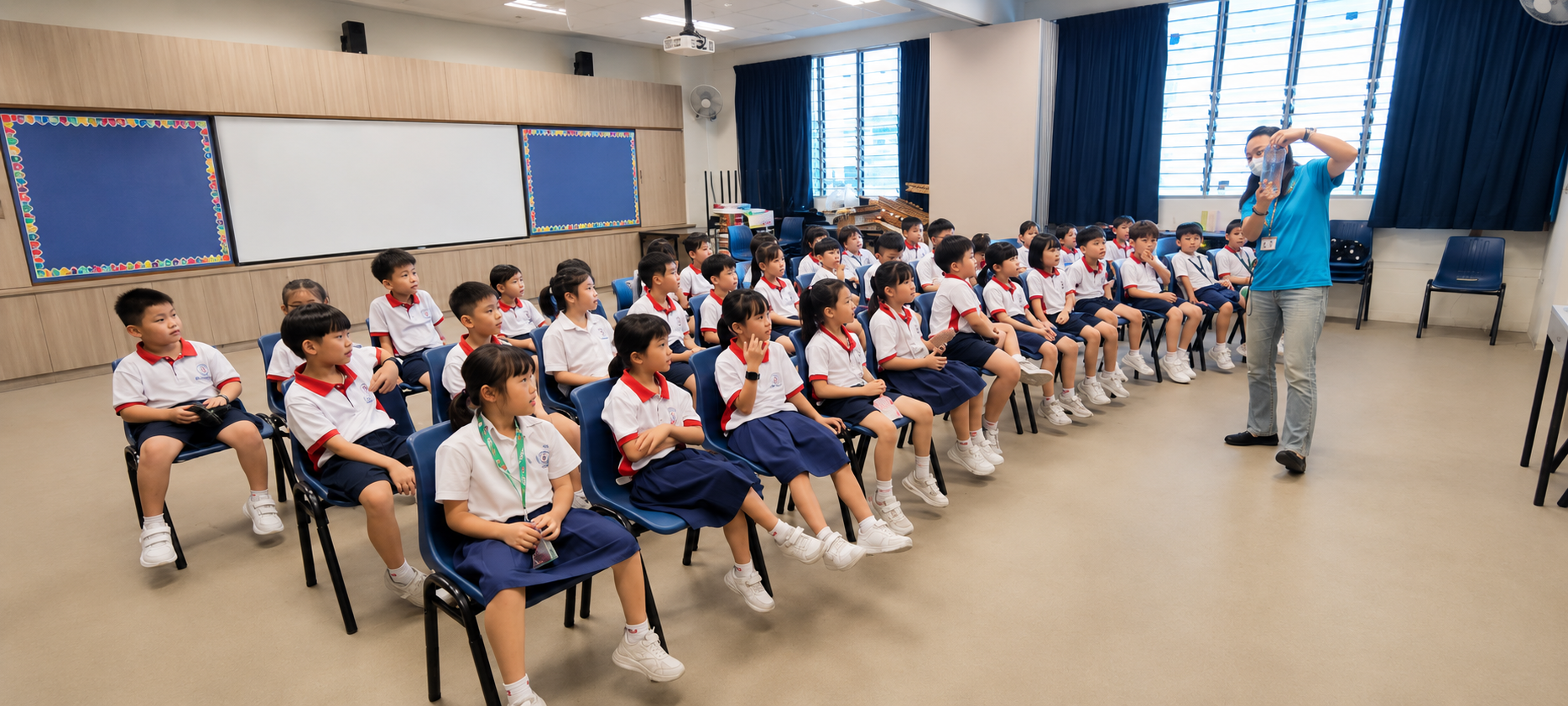
Book Sharing by our Parent Support Group
At RSS, we believe that every child can grow in confidence and develop a love for the English Language through meaningful experiences and strong home-school partnership. We warmly encourage parents to continue supporting their children’s reading, communication and language development at home as we work together to nurture curious minds, thoughtful communicators and lifelong learners.
Useful links