
学生全能发展 Student Development
Discover how we develop every student holistically and enable them to have a positive school experience, through well-designed programmes and relationship-building, set in a culture of care.
Key Programmes / Activities
RSS Student Development Team is committed to enhancing the quality of school experience for all students, through well-designed programmes and initiatives that promote student holistic development and well-being, set in a culture of care.
A Culture of Care
.png)
Together with the form teachers, the Year Heads and Assistant Year Heads, support student well-being in the following areas:
Building a Strong Identity:
Students need a healthy sense of self-worth to believe that they are valued and capable. When they have a positive outlook, they are more likely to persevere through challenges. A sense of meaning and purpose helps them understand why learning matters and how they can contribute beyond themselves.
Building Positive Teacher-Student and Student-Student Relationships:
Well-being is strongly linked to positive relationships. Students benefit from having supportive friends and at least one significant, caring adult, whether that is a teacher, mentor, or family member. Feeling connected to family, peers, and the wider community gives students a sense of belonging and emotional safety.
Making Responsible Choices for Life:
Daily habits play a big role in well-being. This includes maintaining a healthy diet and active lifestyle, getting adequate sleep, and practising healthy digital device use. Students also need support in managing their time, so that they can strike a healthy balance between work and play.
When these factors are present, students are better able to cope with stress, build resilience, and thrive academically and emotionally. When schools and parents work in partnership to support these areas, we strengthen the foundations for the children’s overall well-being and long-term success, and we help them grow into confident, resilient and responsible individuals.
Our Programmes and Support Structures
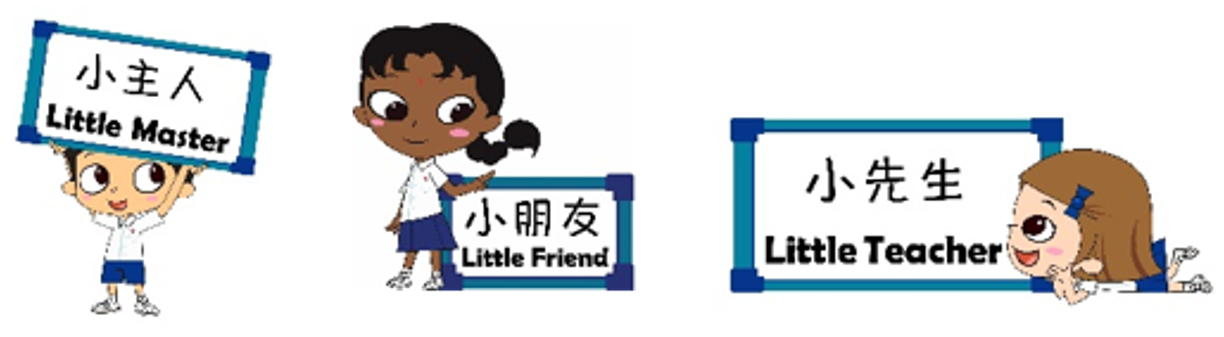
The Student Development Team anchors its efforts on the ‘Three Littles’ to concretise the desired values, personal qualities and behavioral outcomes for our students.
Back To School, Start It Right and End It Right Programmes
We believe in starting the terms right for our students. Hence, Back to School (Term 1) and Start It Right (Term 2 - 4) Programmes are designed to ease our students’ transition to a new school year or term. End It Right Programmes are designed to guide students to a good closure of each term, with rich learning and meaningful reflection. All programmes are aligned to the focus of each term and customised to meet the developmental needs of our students at different levels and they help:
Set expectations and routines with students to provide a positive learning environment for everyone
Build strong, positive relationships; and
Enable target setting/reflection by students to consolidate learning and set sight on future achievement and developmental goals.
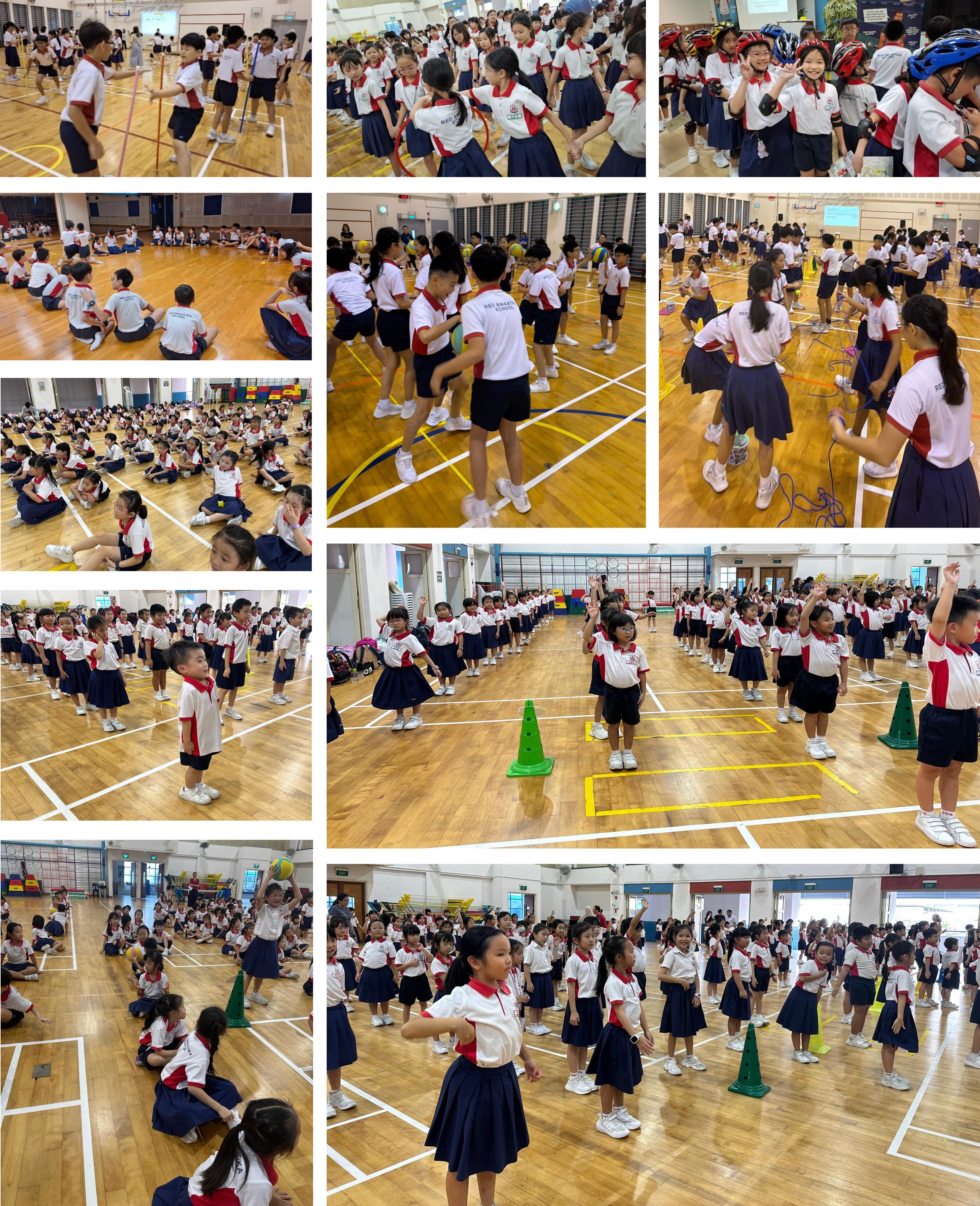
Level-Focused Student Development Programmes
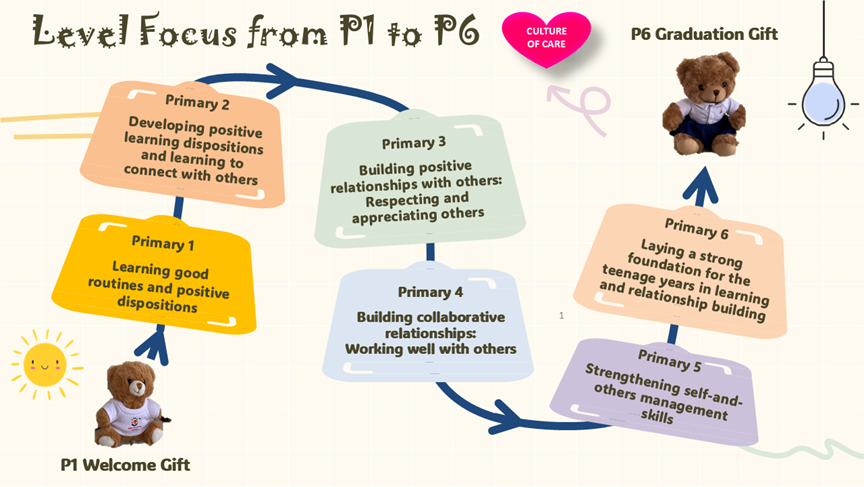
Our level/block focus mirrors our commitment to growth at every stage:
For the Lower Block (P1 and P2), we focus on building routines, positive dispositions and basic social skills in these foundational years of primary school education. Through well-designed approaches and programmes, we guide students to discover their strengths and interests, and acquire values, knowledge, skills and dispositions that will hold them in good stead for life.
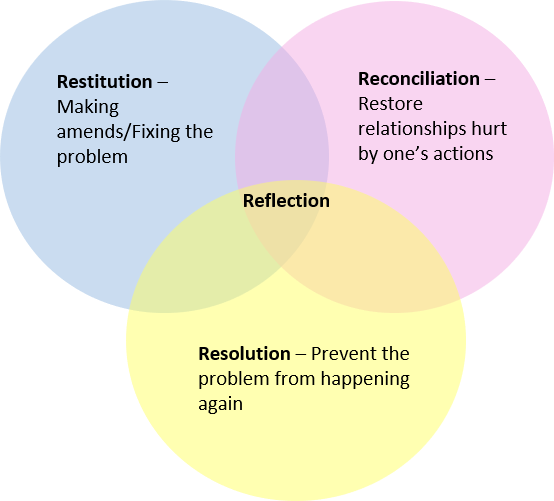
For the Middle Block (P3 and P4), as students transit from P2 to P3 and continue their development in P4, we guide them on a continuous journey to acquire values, dispositions and skillsets that will help them to build strong relationships with others and navigate the challenges they may face in different learning and social contexts. At this stage, social interaction is more than just making friends. It involves learning to cooperate, communicate respectfully, and resolve differences. We leverage every learning opportunity to guide students to reflect, make amends, and build positive relationships.
For the Upper Block (P5 and P6), we prepare them for the teenage years. Through intentional guidance and meaningful experiences, we guide students to develop self-management and relationship-building skills, enabling them to navigate challenges with confidence and resilience. Students are guided to develop greater self-awareness, emotional regulation, responsibility, and decision-making skills. They also learn effective communication, empathy, teamwork, and conflict management strategies to build positive relationships with peers, teachers, and family members.
Positive Teacher-Student Relationships
We believe that teachers play a significant role in mentoring students. Hence, the school has put in place multiple avenues to help teachers establish rapport with our students. Through these avenues, teachers build positive teacher–student relationships (TSR), leading to positive student outcomes in learning, relationship management as well as well-being.
Supporting Student Well-being through a Tiered System of Support
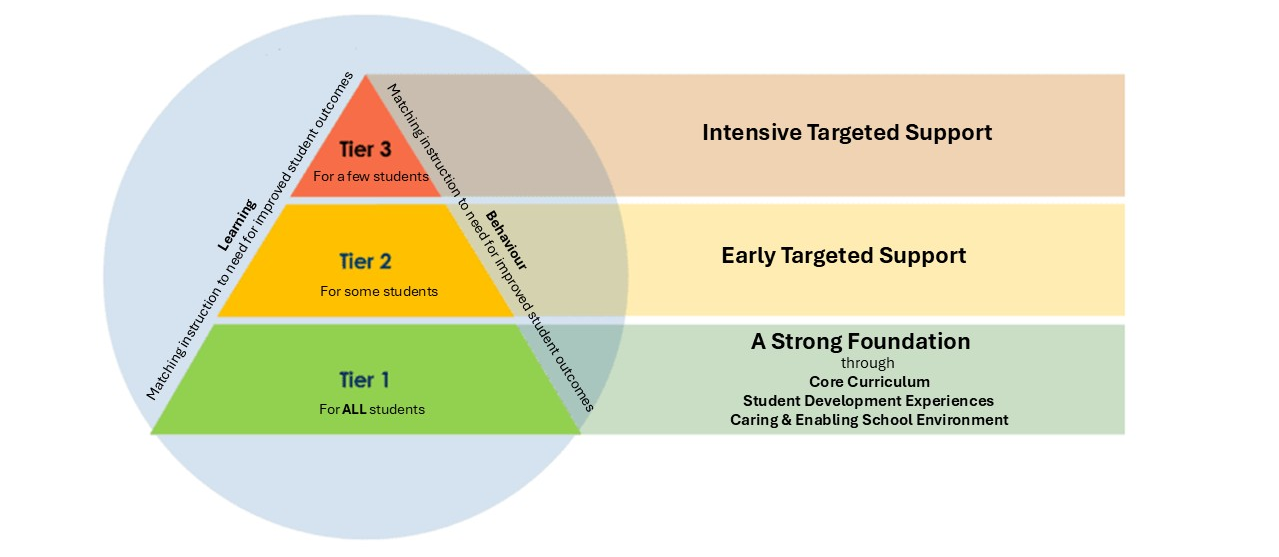
To enable every student to thrive, the school adopts a tiered approach to support students. This allows us to provide the right level of care and guidance, ranging from school-wide programmes to individualized intervention.
Tier 1: A Strong Foundation (For ALL Students)
Tier 1 focuses on creating a positive school culture that builds character and essential life skills. This foundation serves as a preventive measure, ensuring every child feels safe and empowered to learn.
A Caring Environment: We build a supportive atmosphere through strong Teacher-Student Relationships (TSR) and Peer Support and Relationships (PSR).
Holistic Development: Students engage in Character and Citizenship Education (CCE) and 21st Century Competencies (21CC) to develop social, emotional, and cognitive skills.
Positive Growth: We monitor student well-being and focus on identifying and nurturing each child's unique strengths and potential.
Tier 2: Early Targeted Support (For students who need additional support)
In addition to the Tier 1 foundation, some students may require extra help in specific areas—whether academic, social, or emotional. Tier 2 provides early intervention to help students get back on track.
Small Group Learning: Support is provided through specialised programmes like the Learning Support Programme or after-school remediation.
Enhanced Engagement: Programmes such as Student Care Centres and After-school Support Lessons provide structured environments for students to grow after school hours.
Strengthening Factors: We focus on building the child's confidence and improving their social and behavioral resilience.
Tier 3: Intensive Targeted Support (For students who need more intensive support)
For students with more complex or severe needs that persist despite Tier 2 support, we provide highly individualized and intensive care.
Individualised Care: Support may include one-to-one counselling or customized Individual Learning/Behaviour Plans.
Specialised Expertise: This tier often involves collaboration with specialised personnel, government agencies, and community partners to provide a comprehensive support network for the child.
Positive Peer Relationships: Student Peer Supporters Programme
The Student Peer Supporters (SPS) Programme and Buddy System are designed to foster positive social skills and promote a caring and enabling school environment. Built on a 2-tier framework, the programme ensures that support is accessible at every level of student life:
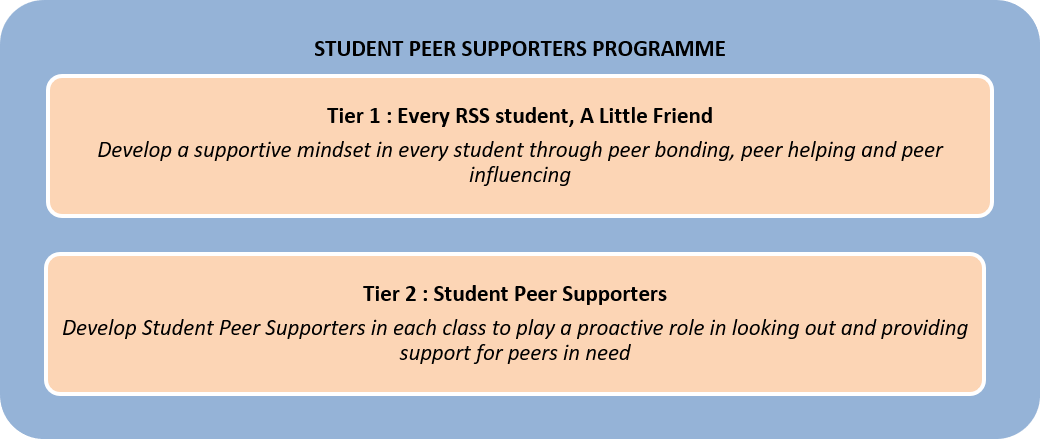
To ensure our SPS are well-equipped for their roles, they undergo regular training sessions that include:
Skill Building: Developing emotional literacy, active listening, and empathy to provide sensitive emotional comfort.
Practical Strategies: Learning how to identify distress signals in peers and provide appropriate practical guidance.
Referral Procedures: Understanding when and how to escalate concerns to teachers, ensuring a robust safety net for all students.
Through these sessions, SPS build the confidence and competence needed to support their peers effectively, fostering a school-wide spirit of care, support and respect.
Student Leadership Development @RSS
Our Learning for Life Programme (LLP) – “Every RSS Student a Leader” is developed in alignment to our school vision of a Caring Community of Lifelong Learners, Glocal Citizens and Innovative Leaders. It aims to nurture RSS students who are dedicated to serving and giving back to the community.
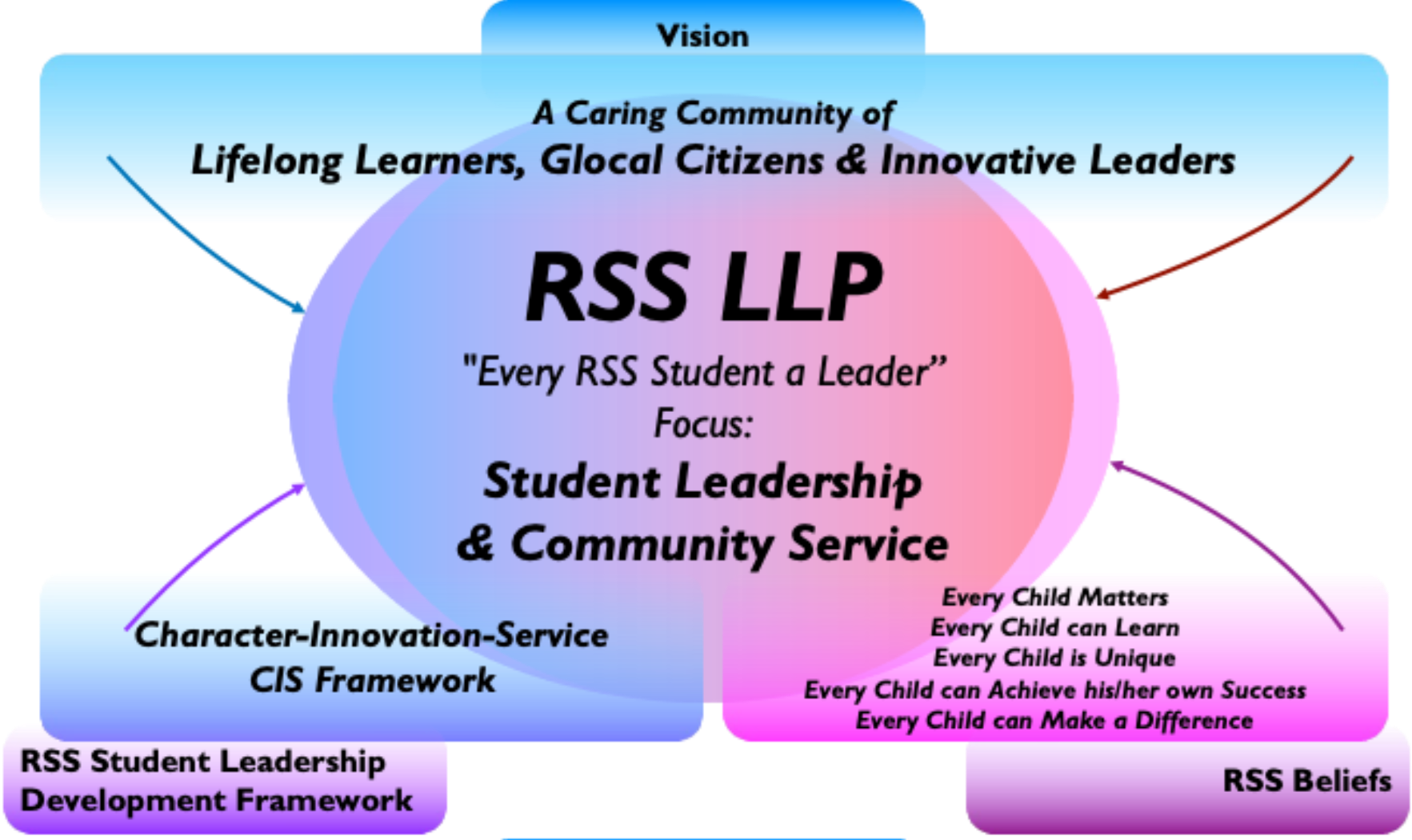
Guided by our RSS beliefs and CIS (Character, Innovation and Service) Leadership Framework, students are developed to possess the character traits of innovative leaders, so as to make life better for others by doing things differently, through the many service platforms made available to them in school.
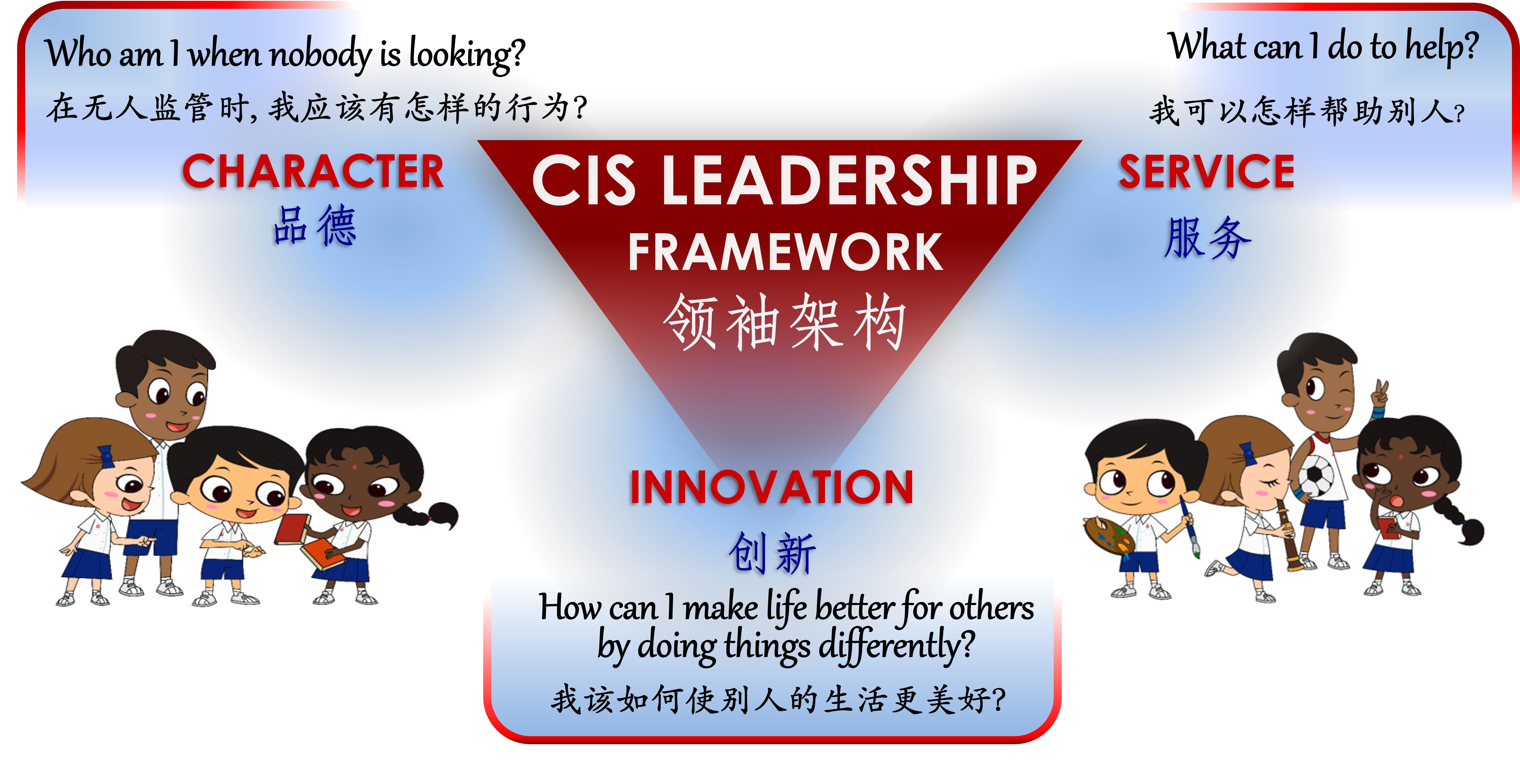
RSS CIS Leadership Framework
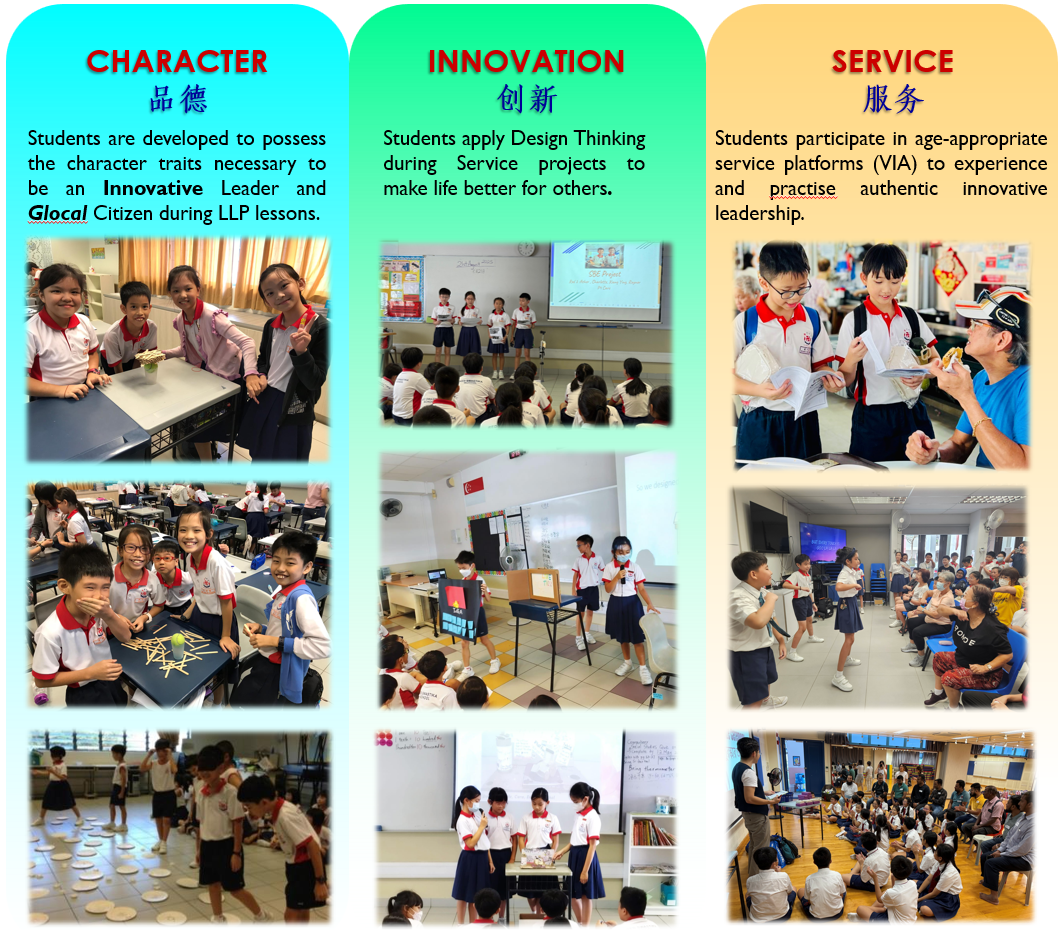
The LLP activities are focused on the three key components of the CIS (Character, Innovation and Service) Leadership Framework.
Every RSS Student, a Leader
RSS students develop their leadership on 2 Tiers:
Tier 1 Leaders – All students (Tier 1 Leadership Roles)
Tier 2 Leaders – Selected Students (CCA Leaders, Prefects, School Ambassadors)
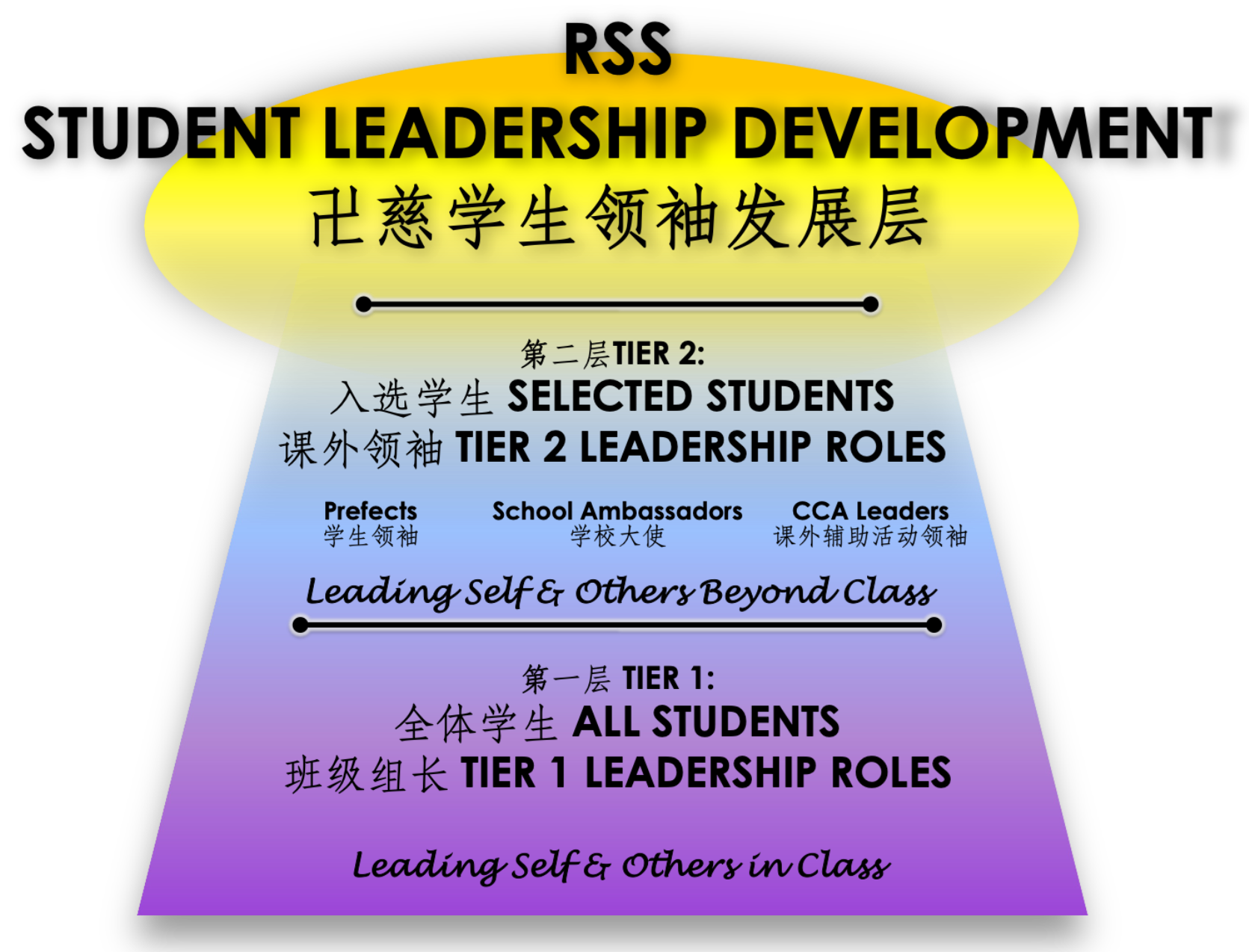
RSS Student Leadership development consists of Two Tiers. In Tier 1, every student takes on a leadership role, developing them to lead self and others in class. In Tier 2, the leadership development is for selected students where they serve by leading self and others beyond the class.
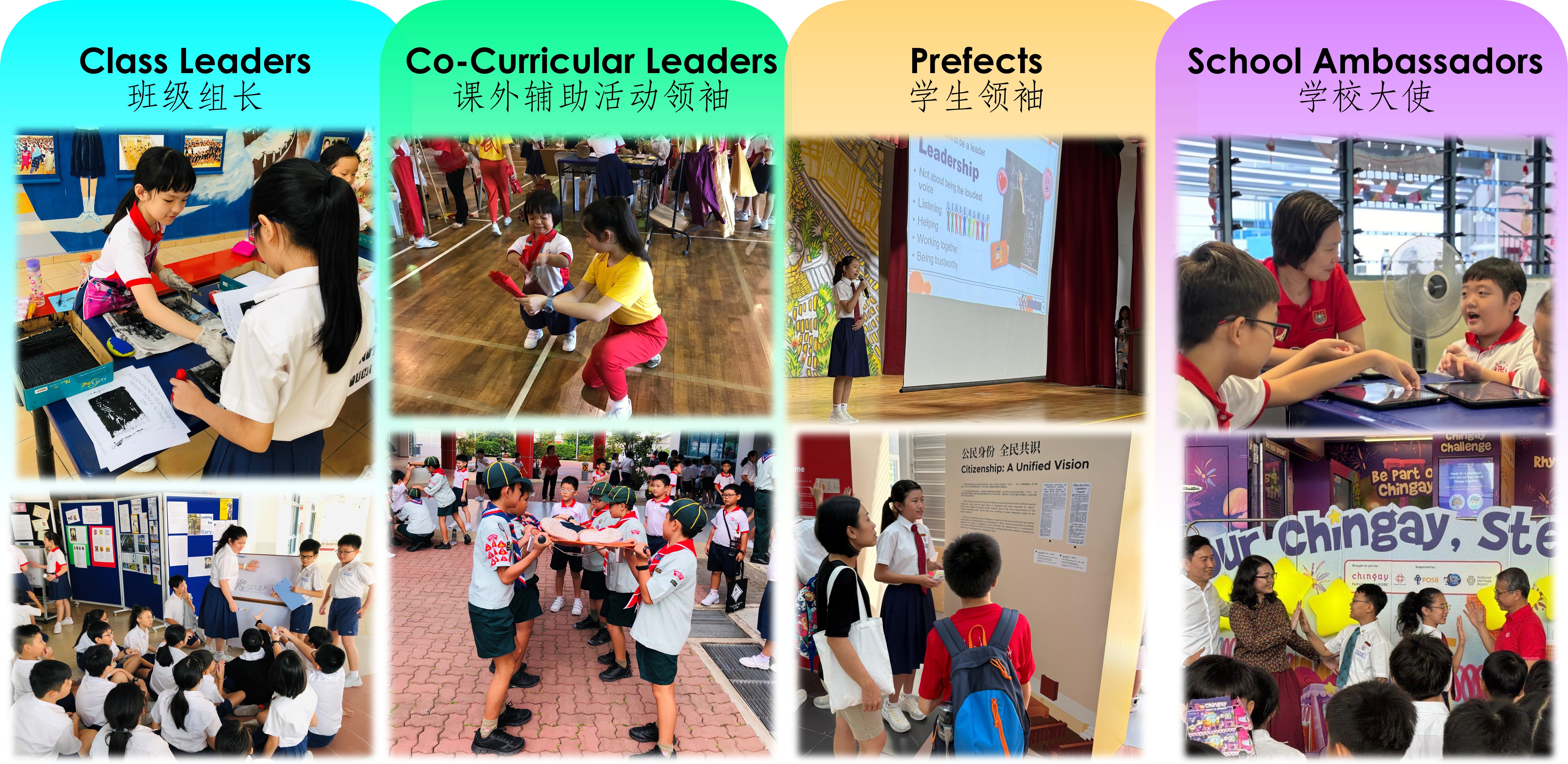
RSS Leaders in actions, serving within class and beyond class.
Empowering students – RSS Buzz Stop
RSS is home to our students, and every student plays an active role as an Innovative Leader, in improving the school for everyone.
RSS Buzz Stop is a space set aside [in the school canteen] for student-led facilitation sessions, student voice and idea-sharing, recognition of everyday RSS heroes, and as a visual anchor for SHAPE
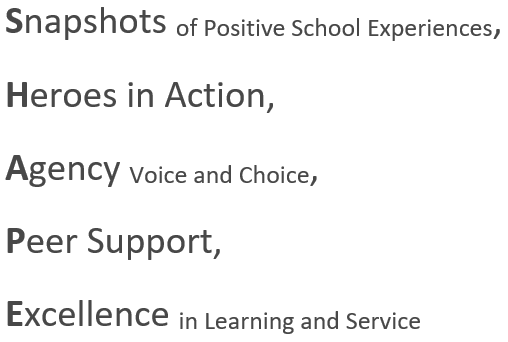
and Student Leadership culture. Through RSS Voice, a student feedback platform, students are empowered to initiate efforts to make life better for everyone in the school – By Students, For Students!
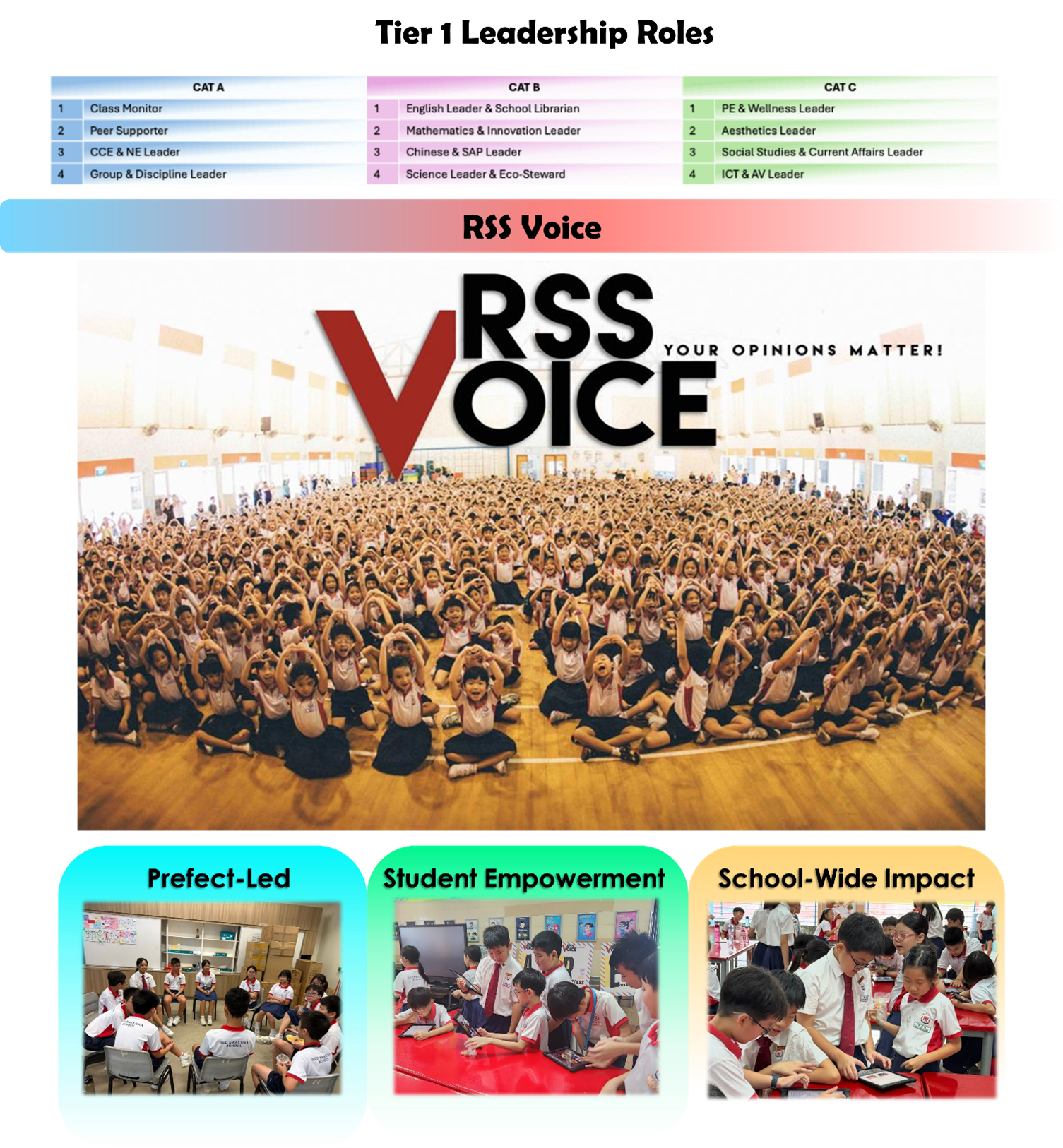
Student Advocacy, Student Voices
Our Positive Disciplinary Approach
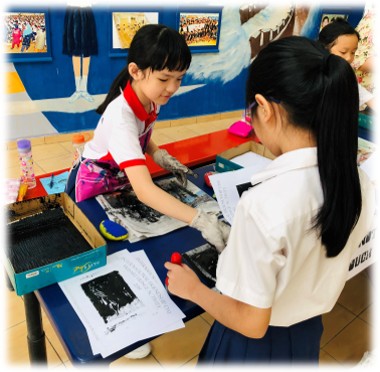
The school adopts a positive disciplinary approach, where we seek to ‘catch’ students doing right and leverage reflective practice to help students take responsibility for their actions and learn that their actions carry consequences. Anchored in a reflective approach, students face consequences that are based on the 3Rs (Restitution, Reconciliation, Resolution). Reflection questions are framed using the Three Littles as part of the school’s unique approach to character development.
Management of Bullying and Hurtful Behaviours @RSS
The school adopts a zero-tolerance stance towards bullying and hurtful behaviours. All reported cases are investigated thoroughly, using information from multiple sources to ensure fair and appropriate action. Depending on the severity and frequency, actions taken may range from counselling and restorative conversations to removal of privileges or suspension, in line with the Student Handbook. We strongly encourage students to report incidents early so the school can intervene promptly and support all parties involved.
Grow Well SG
We are committed to supporting Grow Well SG, Singapore's nationwide initiative aimed at fostering holistic well-being in children. Built around five foundational pillars — Eat Well, Sleep Well, Learn Well, Exercise Well, and Bond Well — the programme takes a comprehensive approach to cultivating healthy habits from an early age.
Home-School Partnership
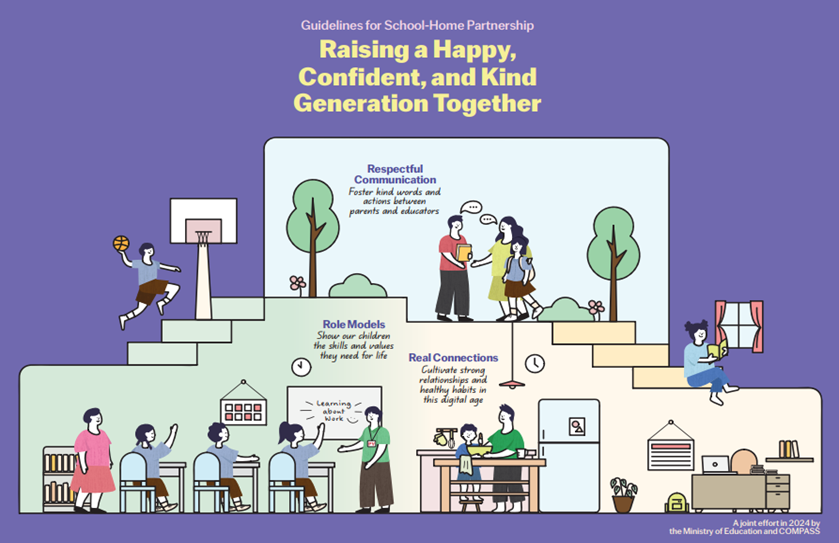
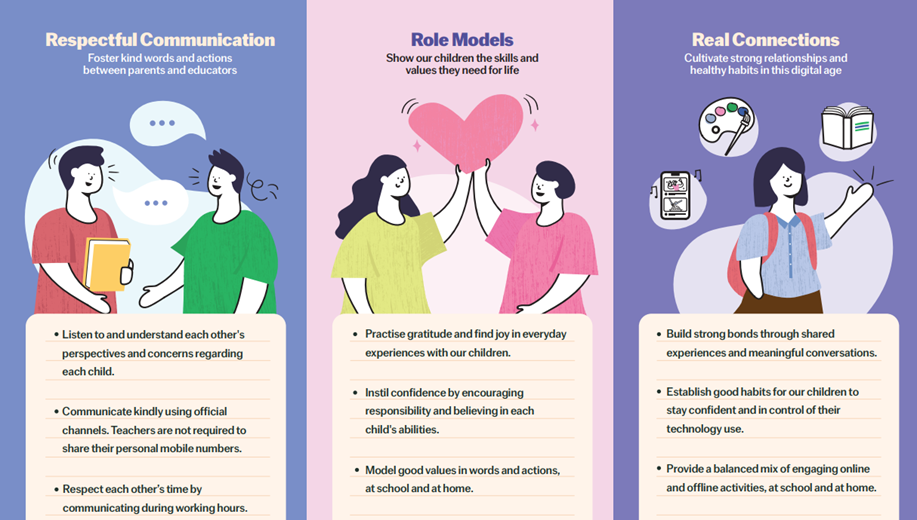
Parents play a critical role in shaping their children’s values and behaviour. A strong partnership between school and parents ensures that every child feels safe, valued, and respected. In RSS, we believe that a strong home-school partnership is the foundation for every child's growth and success. In alignment with MOE’s Guidelines for School-Home Partnership, we encourage all parents and caregivers to engage our teachers and staff in a spirit of mutual respect and kindness. This means communicating through official channels during working hours, listening openly to one another's perspectives, and trusting in our shared commitment to every child's well-being. Together, as role models in both words and actions, we can raise a generation that is happy, confident, and kind. We look forward to growing this partnership with you.
To strengthen home-school partnerships, teachers engage parents through the following platforms and initiatives:
Home-school communication platforms and their focus
Platform | Focus |
Class Dojo / Email / Phone Call | Primary channels of communication, enabling form teachers to establish direct and personal contact with parents |
RSS Parents’ Portal | Key communication bridge, keeping parents informed, involved, and empowered throughout their child's learning journey |
RSS Instagram | Celebrates school life and nurtures community connections by offering parents a glimpse into school events, Co-Curricular Activities (CCAs), and everyday school life through curated snapshots |
Parent Conference | Getting to know the Form Teachers |
Parent-Child-Teacher Conference | Facilitate meaningful conversations centred on each student's holistic development |
Parent Engagement Forums | Gaining insights and practical guidance on children’s behavioural development from professionals |
The school also participates in the Positive Parenting Programme (Triple P), through which parenting seminars are organised to equip parents with parenting skills to promote their children’s psychological, social and emotional competence. As valued partners in education, we look forward to the active participation of parents in supporting the development of our students together.
Useful Resources
MOE Parent Kit: Parent-Child Relationship
https://www.moe.gov.sg/parentkit?pt=Parent-Child%20Relationship (opens in new tab)MOE Parent Kit: Well-being
https://www.moe.gov.sg/parentkit?pt=Well-Being (opens in new tab)Families for Life: Parenting Resources for Children (7-12 years) https://familiesforlife.sg/pages/fflp-modules?fflpgroup=6 (opens in new tab)
Schoolbag: Parenting
https://www.schoolbag.edu.sg/story-tag/parenting/ (opens in new tab)SEL Resources for Parents
https://www.moe.gov.sg/education-in-sg/our-programmes/social-and-emotional-learning (opens in new tab)Parenting for Wellness
https://parentingforwellness.hpb.gov.sg/ (opens in new tab)